There Is No Such Thing as an “Addictive Personality”
A recent study published in a peer-reviewed scientific journal illustrates how Project Turnabout’s approach to recovery is supported not only by more than 50 years of experience, but by science.
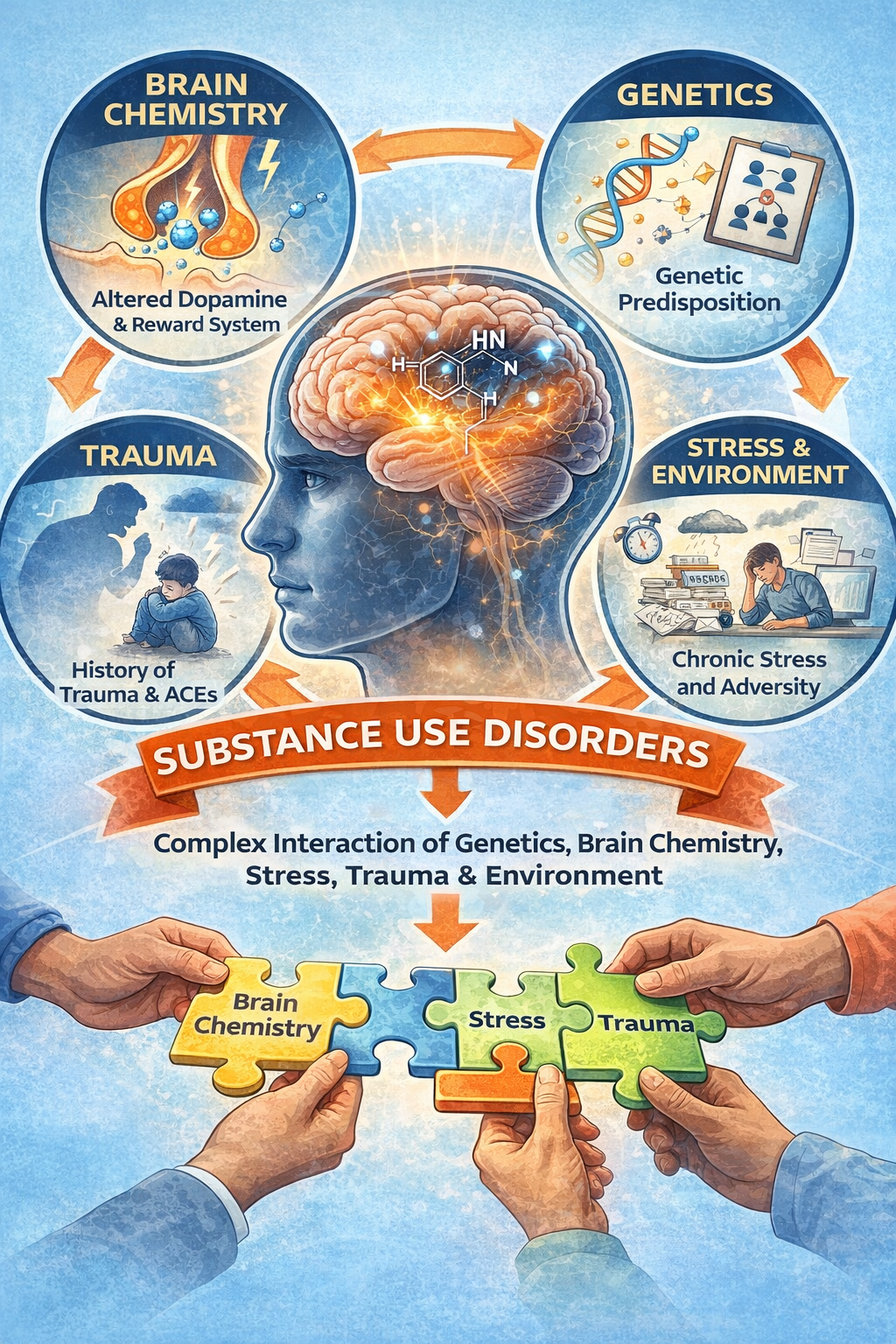
The research shows that addiction is not caused by a single personality type or a lack of willpower. Instead, substance use disorders develop through a complex interaction of genetics, brain chemistry, stress, trauma, and environment. This mirrors what Project Turnabout has seen for decades: people do not struggle because they are broken. They struggle because their brains and bodies have been under more stress than they could manage alone.
The Main Point
There is no such thing as an addictive personality. Addiction is not a character flaw. It is a health condition shaped by biology and life experience.
What the Study Found
- People are born with different brain responses to stress, reward, and emotion
- Trauma and long-term stress increase the brain’s vulnerability to substance use
- Brain chemistry and gut health affect mood, cravings, and impulse control
- Addiction risk increases when multiple factors stack up, not because of one “bad trait”
- Recovery works best when treatment supports the whole person, not just abstinence
Why This Matters for Recovery.
This research supports Project Turnabout’s whole-person approach to care. Treatment that includes mental health support, physical health, structure, connection, and stability helps the brain heal. When people are supported instead of blamed, they are more likely to stay engaged, build coping skills, and move forward in recovery.
If you or someone you love is struggling, you are not alone and you are not broken. Help is available.
Reach out to Project Turnabout to learn more about treatment, support services, and pathways to recovery.