Gambling Disorder: The Overlooked Public Health Issue Hidden in Plain Sight

Gambling has become a routine part of modern life. From state lotteries and casino resorts to online sportsbooks and mobile betting applications, opportunities to gamble are more accessible than ever. For many people, gambling remains recreational. For others, however, gambling quietly shifts from entertainment to compulsion. Gambling disorder, now recognized as a behavioral addiction by the American Psychiatric Association, affects millions of people worldwide and often goes unnoticed until the consequences are severe.
Epidemiological data suggest that gambling disorder affects approximately 1 to 3 percent of the adult population globally. In the United States alone, an estimated 2.5 million adults meet diagnostic criteria for severe gambling disorder, while an additional 5 to 8 million experience moderate gambling-related problems that significantly impair their lives. When broader definitions of problem gambling are applied, some studies estimate that as many as 3 to 5 percent of Americans experience gambling-related harm in a given year. Though these percentages may appear small, they represent tens of millions of individuals when viewed across populations, families, and communities.
Despite its prevalence, gambling disorder remains widely misunderstood. One contributing factor is the normalization of gambling itself. Surveys indicate that roughly 85 percent of U.S. adults have gambled at least once in their lifetime, and approximately 60 percent report gambling within the past year. As sports betting expands across states and gambling advertisements saturate media platforms, the behavior is increasingly framed as socially acceptable, low-risk, and even glamorous. This cultural acceptance complicates the public’s ability to recognize when gambling has crossed from leisure into pathology.

Clinically, gambling disorder is classified as a non-substance-related addiction, sharing neurobiological and behavioral similarities with substance use disorders. Research demonstrates that gambling activates reward pathways in the brain associated with dopamine release, reinforcing behavior in a manner similar to alcohol or drugs. Over time, tolerance can develop, leading individuals to gamble more frequently or with higher stakes to achieve the same psychological effect. The absence of intoxication or visible withdrawal symptoms, however, often leads individuals to underestimate the seriousness of the condition.
For this reason, gambling disorder is frequently described as a “hidden addiction.” Unlike substance-related disorders, gambling problems rarely present with obvious physical signs. Individuals may maintain employment, family roles, and outward stability while experiencing escalating internal distress. The rise of online and mobile gambling further intensifies this invisibility, allowing individuals to gamble privately, around the clock, without leaving their homes. Financial losses can be concealed through credit cards, loans, or digital transactions, delaying detection by loved ones.
The harms associated with gambling disorder extend far beyond financial strain. While financial consequences are often the most visible outcome, research consistently demonstrates significant psychological, emotional, and relational impacts. Individuals with gambling disorder experience disproportionately high rates of depression, anxiety disorders, and substance use disorders. Some studies indicate that nearly three-quarters of individuals diagnosed with gambling disorder meet criteria for at least one co-occurring psychiatric condition.
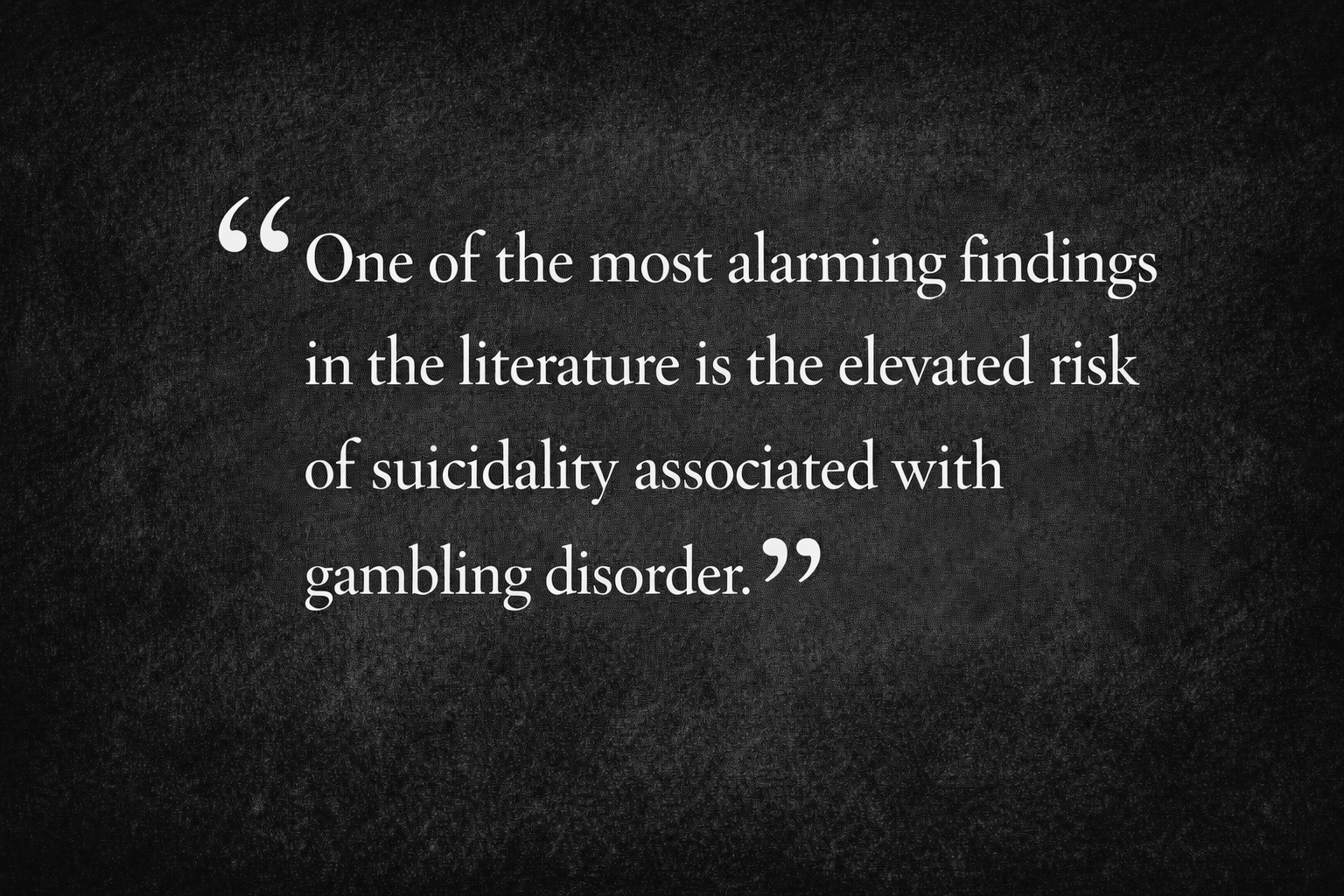
One of the most alarming findings in the literature is the elevated risk of suicidality associated with gambling disorder. Population studies reveal that individuals with gambling problems report higher rates of suicidal ideation, suicide attempts, and suicide-related hospitalizations than the general population. Researchers attribute this risk to a combination of factors, including overwhelming debt, relationship breakdown, shame, secrecy, and a perceived loss of control. Unlike other addictions, gambling-related crises can escalate rapidly, particularly when financial collapse occurs abruptly.
Relationships are frequently strained as gambling disorder progresses. Trust erosion, secrecy around finances, emotional withdrawal, and broken commitments often lead to conflict with partners and family members. In some cases, individuals resort to borrowing money, selling possessions, or engaging in illegal behavior to sustain gambling, further compounding relational and legal consequences. Workplace performance may also suffer, with increased absenteeism, reduced concentration, and, in severe cases, job loss or disciplinary action.
Importantly, gambling disorder does not affect all populations equally. Research consistently shows higher prevalence rates among men, although the gender gap has narrowed in recent years, particularly among younger adults. Adolescents and young adults appear to be at heightened risk, especially with the proliferation of online gambling platforms and sports betting applications designed to mimic video game mechanics. Individuals with prior histories of trauma, substance use disorders, or untreated mental health conditions are also more vulnerable to developing gambling-related problems.
A defining feature of gambling disorder is that individuals often struggle to recognize the problem themselves. Many people who meet diagnostic criteria do not self-identify as having an addiction, particularly in the early stages. Gambling problems often develop gradually, with periods of apparent control interspersed with episodes of loss. This cyclical pattern can reinforce denial and minimize perceived risk. The belief that losses can be recovered through continued gambling, commonly referred to as “chasing losses,” further entrenches the behavior.
From a public health perspective, gambling disorder remains underdiagnosed and undertreated. Despite its inclusion in diagnostic manuals and growing research base, access to specialized treatment remains limited in many regions. Stigma, lack of awareness, and misconceptions about gambling as a “self-control issue” rather than a medical condition contribute to low treatment-seeking rates. Studies indicate that only a small fraction of individuals with gambling disorder ever receive formal treatment, even though evidence-based interventions, including cognitive-behavioral therapy and peer support programs, have demonstrated effectiveness.
For individuals questioning whether their gambling may be problematic, uncertainty itself can be an important signal. Reflecting on the emotional role gambling plays, the impact on finances and relationships, and the ability—or inability—to stop can offer insight. Early recognition is associated with better outcomes, reduced harm, and improved quality of life.
As gambling opportunities continue to expand, the need for public education and early intervention grows more urgent. Gambling disorder is not a moral failing or a lack of willpower; it is a complex behavioral addiction shaped by neurobiology, environment, and access. Bringing this hidden disorder into public awareness is a critical step toward reducing harm and ensuring that those affected receive the support they need.