Specialty Court–Compliant Outpatient Treatment

Supporting Accountability, Structure, and Long-Term Recovery
Project Turnabout’s Intensive Outpatient (IOP) and Outpatient (OP) programs are Specialty Court–Compliant, meaning they are intentionally designed to meet the clinical, reporting, and accountability standards required by problem-solving courts.
We work closely with courts to ensure treatment supports both court expectations and long-term recovery outcomes, without disruption as participants move through court phases.
What Specialty Court–Compliant Means at Project Turnabout
Specialty courts require treatment partners who understand court structure, timelines, and accountability. Our outpatient programs are built to integrate smoothly with courts including Drug Courts, DWI Courts, Mental Health Courts, and Veterans Treatment Courts.
Being Specialty Court–Compliant means we provide treatment that courts can rely on, communicate with, and adjust alongside.

Structured Outpatient Care That Aligns With Court Phases
Our IOP and OP services are designed to match the phased nature of specialty courts.
- Graduated levels of care that step down without gaps
- Flexible treatment intensity that aligns with court phase requirements
- Ability to increase or adjust care quickly when needed
Participants remain supported and accountable as expectations change.
Evidence-Based Treatment With Co-Occurring Support
Courts expect treatment that is proven, consistent, and defensible.
Our outpatient programs include:
- Evidence-based substance use treatment modalities
- Integrated mental health and co-occurring disorder care
- Trauma-informed, person-centered treatment planning
- Clinical decisions that are clearly documented and clinically sound
This allows courts to trust treatment recommendations and progress updates.
Accountability Courts Can Count On
Accountability is central to specialty court success.
We provide:
- Reliable attendance tracking
- Regular drug and alcohol testing
- Timely notification of missed sessions or concerns
- Clear documentation of compliance and engagement
Courts are informed early, allowing intervention before small issues become larger setbacks.
Clear, Timely Communication With Court Teams
We understand that specialty courts operate as coordinated teams.
Project Turnabout provides:
- Court-ready progress reports
- Prompt communication with probation and coordinators
- Participation in staffing or case coordination when requested
- Early identification of treatment barriers or concerns
Our goal is to reduce surprises and support informed decision-making.
Individualized Treatment Plans That Support Court Goals
Treatment plans are developed collaboratively and align with court requirements while maintaining clinical integrity.
Plans may address:
- Substance use and mental health needs
- Criminogenic risk factors
- Life skills and stability
- Family and community reintegration
Treatment evolves as participants move through court phases.
Documentation That Supports Court Decisions
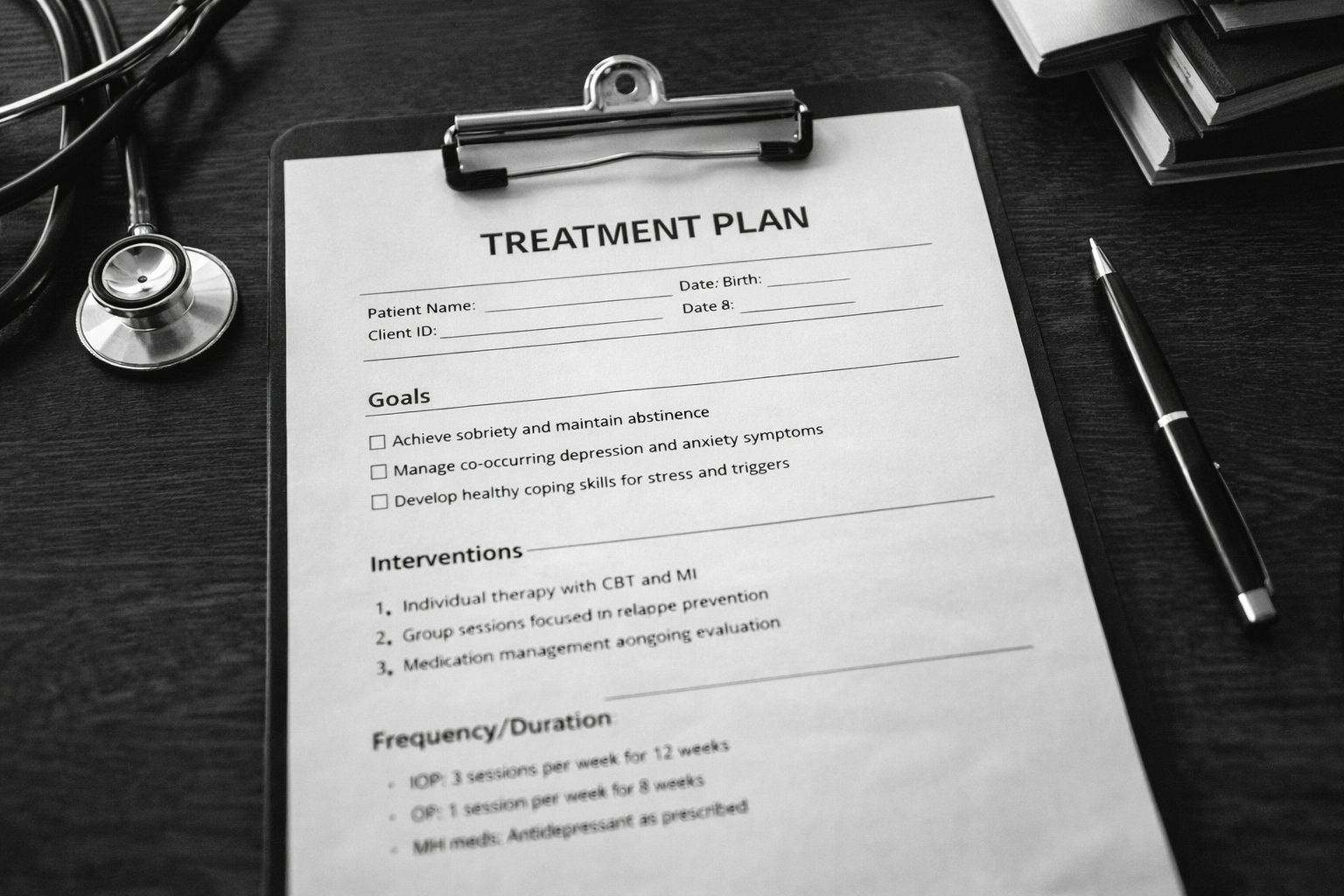
Our clinical documentation is designed to support court processes.
- Clear and consistent progress summaries
- Defensible clinical rationale
- Accurate reporting that protects confidentiality while meeting court needs
Courts receive the information they need to make confident decisions.
Continuity of Care Beyond Court Completion
Specialty courts focus on long-term outcomes, not just compliance.
We support transitions by:
- Connecting participants to continuing care
- Encouraging peer support and community recovery resources
- Helping maintain stability after court supervision ends
Recovery does not end at graduation.
A Reliable Partner for Specialty Courts
Project Turnabout has over 50 years of experience providing evidence-based treatment in rural and regional communities. Our Specialty Court–Compliant outpatient programs are designed to support accountability, collaboration, and sustainable recovery.
We are built to work alongside specialty courts.
Referral Information
To refer a participant or learn more about working with Project Turnabout:
- Contact our admissions team
- Ask about Specialty Court–Compliant IOP and OP services
- We are available to coordinate directly with court teams