Recovery That Grows With You: Project Turnabout’s Step-Down Approach
Recovery is one of the hardest things a person will ever do.
When addiction takes hold, asking for help can feel overwhelming. Many people wait until things get so bad that someone else has to make the decision for them. At Project Turnabout, we understand that people come to recovery at many different stages. That is why we focus on meeting people where they are and helping them move forward, one step at a time.
Recovery is not one decision, and it is not one level of care. People need different kinds of support at different times. This is why Project Turnabout uses a step-down approach. We provide more structure and support early on, then slowly reduce that support as stability and independence grow. The goal is not quick change, but real recovery that lasts.
What Step-Down Care Means
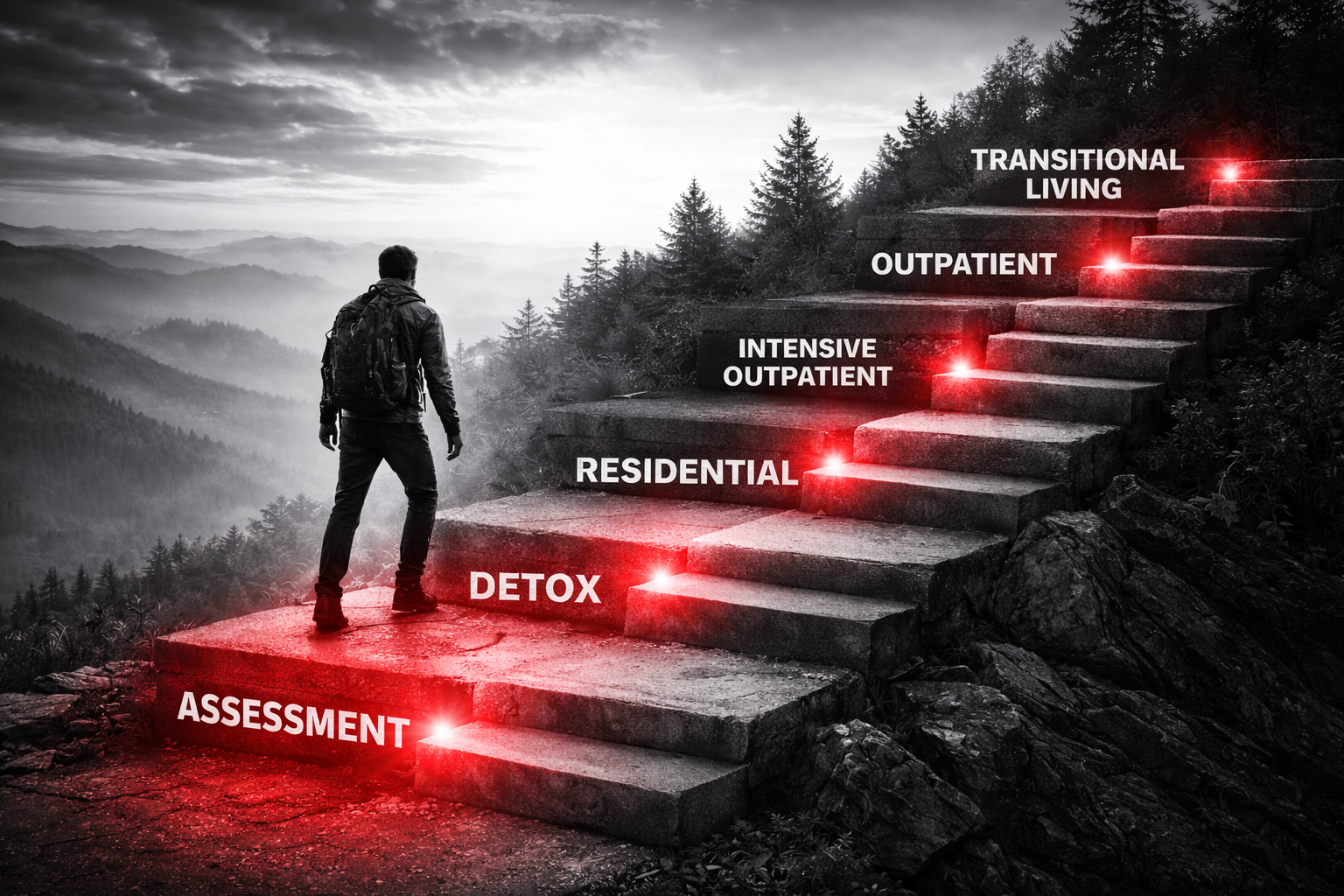
Step-down care is a planned pathway. Instead of starting and stopping treatment or being discharged too quickly, people move through stages of care based on their needs and progress. Each step builds skills, confidence, and support that work in everyday life. You are not rushed, and you are not left to figure things out alone.
Why Step-Down Care Works
Recovery does not happen in isolation. It happens within systems of support. When people lose support all at once, the risk of relapse increases. Step-down care helps prevent that by keeping help in place while people practice recovery in real-world situations. It also provides clarity. You know what comes next, and you have a plan.
It Starts With a Confidential Assessment
Every recovery journey begins with a confidential assessment. This is a conversation with our team to understand what is going on in your life. We look at substance use, mental health, stress, safety, and current supports. Together, we talk through options and recommend a starting point. Scheduling an assessment does not mean you are committing to treatment. It simply helps you understand your choices.
Medical Detox
For some people, the safest first step is medical detox. Detox focuses on safety and comfort during withdrawal from alcohol or drugs. Our medical team monitors symptoms, provides support, and helps plan the next step in care.
Residential Recovery
Residential treatment offers a structured environment where people can focus fully on healing. Days include therapy, group support, and skill-building. This level of care helps people stabilize, reset routines, and build a strong foundation for recovery.
Intensive Outpatient (IOP)
Intensive outpatient treatment provides strong support while allowing people to live at home. At Project Turnabout, IOP meets nine hours per week for twelve weeks. This level of care offers accountability, routine, and frequent support while people begin practicing recovery in daily life.
Outpatient Care
Outpatient care happens in multiple phases, with support slowly stepping down over time. This helps people continue building skills, prevent relapse, and stay connected to care while gaining independence.
Transitional Living
For some people, stable housing is a key part of staying stable in recovery. Project Turnabout offers men’s and women’s transitional living. These programs provide a safe, structured place to live while continuing treatment and building life skills for long-term success.
Treating the Whole Person
Project Turnabout treats substance use and mental health together. We combine evidence-based care, life skills, and the Twelve Steps to support the whole person. Recovery is about more than stopping substance use. It is about building emotional, mental, and practical stability.
The Goal: Recovery That Holds Up in Real Life
Step-down care helps people move forward safely and steadily. You receive the right level of support at each stage, and transitions are guided instead of rushed. Our goal is long-term recovery that works in real life, not just short-term change.