Women Are Not Less Affected by Gambling Disorder. They Are Less Seen.
Gambling disorder is not a men’s problem. It is not a women’s problem. It is an everyone problem. Yet statistically, men are still more likely than women to be identified, referred, and treated for gambling disorder. This gap does not reflect lower harm among women—it reflects systemic barriers to care. When treatment programs lack gender-responsive, trauma-informed approaches, women’s specific needs are often overlooked. Combined with high levels of stigma and frequent co-occurring conditions such as anxiety, depression, and trauma histories, many women are effectively left out in the cold when it comes to gambling disorder treatment.
For women, gambling disorder often looks different than it does for men. Gambling can become an escape from chronic stress, emotional overload, conflict, or isolation. For some women, gambling provides a sense of safety, comfort, predictability, or belonging—particularly in online environments that feel private and controlled. Many women describe gambling as a way to disconnect from a chaotic world they feel powerless to change. From their perspective, it may not feel like an addiction at all, but rather a coping strategy that works—until it doesn’t.
What often goes unspoken is how quickly gambling disorder can escalate for women. Research consistently shows a “telescoping” effect, in which women progress more rapidly from recreational gambling to problematic or disordered gambling than men. The rise of electronic and online gambling has intensified this risk. Games such as online slots, bingo, and app-based casino games are designed for continuous play, emotional immersion, and rapid reinforcement, accelerating loss of control. By the time many women present for treatment, the disorder is already severe.
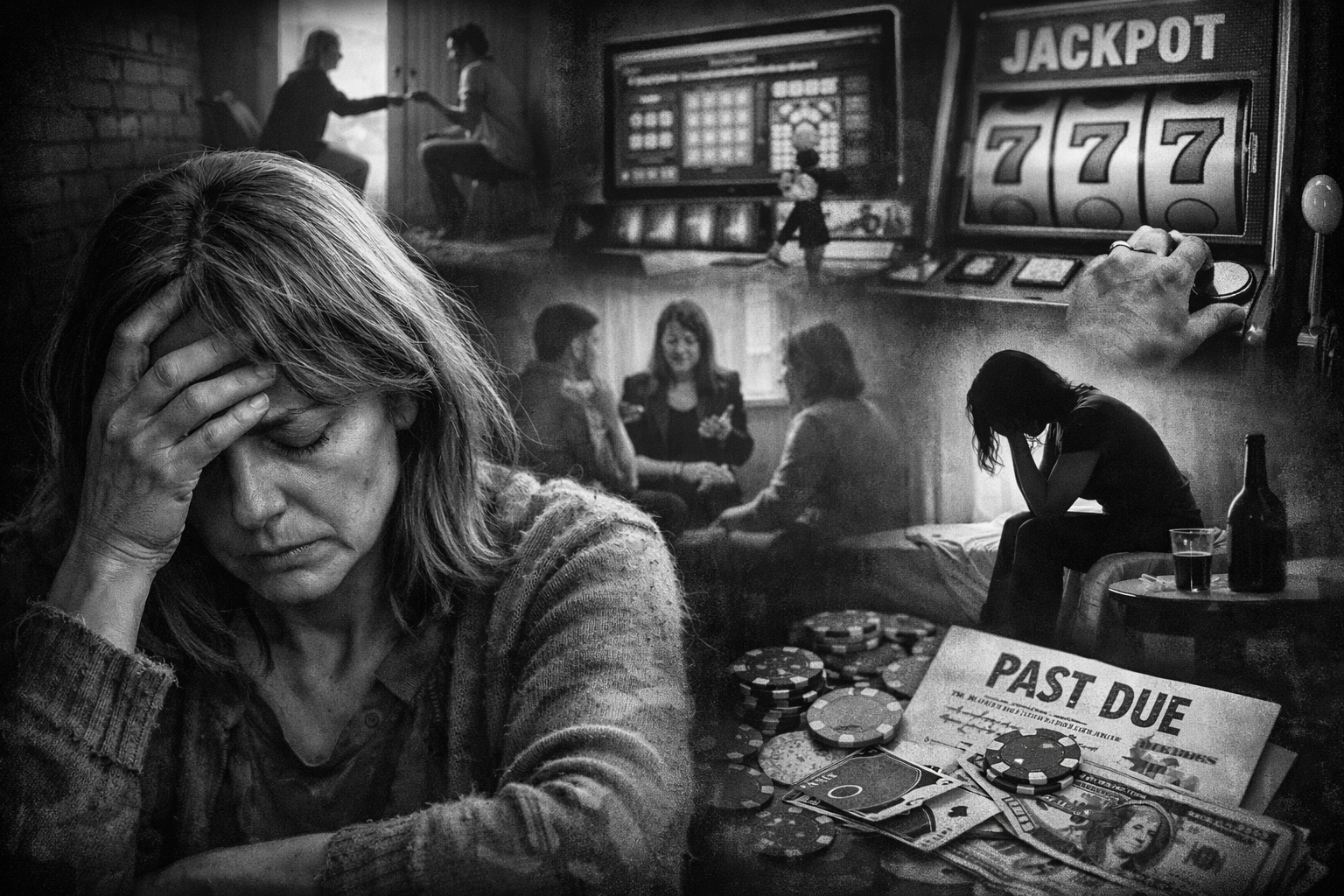
The consequences of escalation are complex and highly individualized. Some women are temporarily buffered by well-meaning family members who step in to prevent homelessness or financial collapse. Others attempt to contain harm by gambling only with “extra” money—until losses exceed their ability to compensate. Some women lose housing, employment stability, or the ability to meet basic needs. Across these experiences, a common thread is profound shame, secrecy, and isolation. Many women in treatment report losses totaling tens or hundreds of thousands of dollars over the course of their gambling, alongside deteriorating mental health and strained relationships.
Importantly, women with gambling disorder are more likely than men to experience co-occurring depression, anxiety, and trauma exposure, and they report higher levels of guilt and self-blame. These factors can delay help-seeking and increase dropout when treatment environments feel judgmental, rigid, or mismatched. Traditional recovery models—many of which were developed decades ago with male populations in mind—may fail to address relational stress, caregiving roles, and emotional regulation needs central to women’s recovery.
Yet there is reason for optimism. When women receive care that is gender-responsive, trauma-informed, and emotionally safe, outcomes are strong. Some studies suggest women demonstrate higher long-term recovery rates than men when engaged in appropriate treatment. The challenge is not women’s capacity for recovery—it is whether systems are prepared to meet them where they are.
As gambling continues to expand through online platforms and electronic formats, the need to design treatment with women in mind is no longer optional. It is essential for equity, effectiveness, and meaningful recovery.

Article by: Julie Cunningham
LADC, JD, ICGC - I, Unit Coordinator Vanguard